It rained from Friday night through most of Saturday morning, and by ten o'clock the kitchen on Bergen Street smelled of wet brick and the leaking radiator under the window.
Lou Bertillon had bought a four-pound bone-in lamb shoulder on Friday afternoon from a butcher on Court Street, along with a bottle of Cahors from a wine shop two doors down that the owner, a Frenchman named Étienne Marsac, had recommended without being asked.
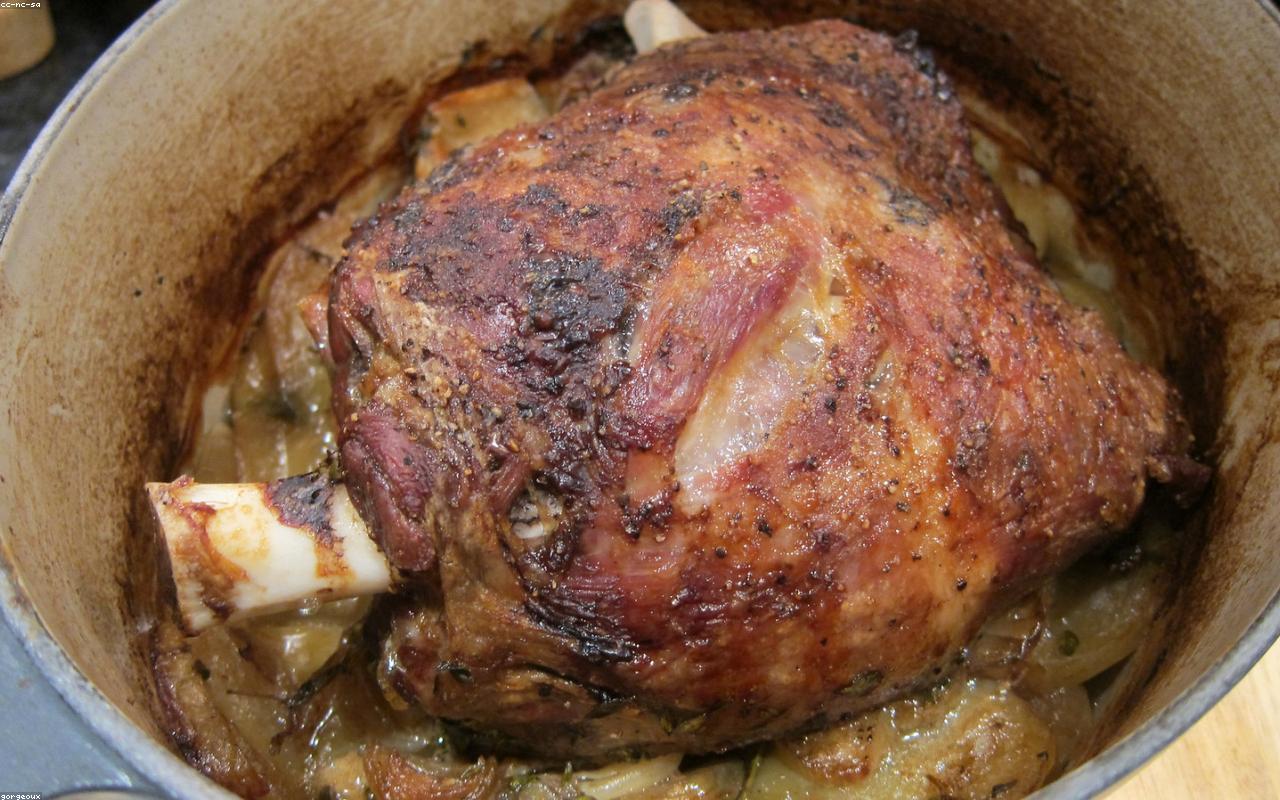
She seared the shoulder on all sides in a heavy cast-iron pan over medium-high heat in a tablespoon of olive oil and a tablespoon of butter, which took about twelve minutes total.
She lifted it out and softened a coarsely chopped onion, two leeks from the bottom drawer of the refrigerator, four garlic cloves smashed with the side of a knife, and three anchovy fillets from a tin she keeps open in the door of the fridge, in the same pan, for about eight minutes.
She added a tablespoon of tomato paste, let it cook for a minute, deglazed with the entire bottle of Cahors, and slid the lamb back into the pan along with a sprig of rosemary from the small potted plant on the fire escape and a bay leaf.
The liquid came halfway up the side of the shoulder. She covered the pan with parchment cut to size and then the lid, slid it into a 300-degree oven at eleven in the morning, and did not open the door until six in the evening.
Seven hours.
In between she did the laundry at the basement machine, finished a novel she had been reading for three weeks, called her brother Thierry to confirm dinner, and watched the rain stop and start twice from the kitchen window.
At six the lamb was almost falling off the bone. The braising liquid had reduced to about a third of its original volume and was the colour of dark plum.
She lifted the shoulder onto a board, tented it with foil, and reduced the liquid further on the stovetop for ten minutes until it coated the back of a spoon.
She strained the sauce through a fine-mesh sieve into a clean pan, pressing the solids with the back of a ladle, and discarded the spent vegetables.
The shoulder pulled apart in long pieces with two forks. She spooned the sauce over the meat on a warm platter and brought it to the table at quarter to seven, when Thierry arrived with a baguette from Bien Cuit that was, properly, a day old.
They ate at the round table by the window. The platter sat between them. There was no other dish except the bread and a small green salad of frisée and a sharp vinaigrette.
Thierry, who is forty-four and lives in Cobble Hill with a partner and a cat named Ravel, has been Lou's most reliable Saturday dinner companion since 2018, when his marriage ended and her restaurant career did the same.
They drank a second bottle of the Cahors, which Thierry had brought.
The lamb, Bertillon notes, did not benefit from any technique she did not already know. The seven hours was the variable. The wine was the variable. The anchovies were the variable.
The anchovies do not announce themselves in the finished sauce. They contribute a depth that the sauce does not have without them. She has been adding them to lamb braises since 2009 and has never had a guest detect them.
The Cahors was a deliberate choice. A lighter red would have been overwhelmed by the lamb and the long reduction. A heavier red would have turned the sauce harsh. The Cahors has the right balance of tannin and fruit for this particular job, and Marsac, who knew her plan when he sold her the bottle, had said as much.
They finished most of the platter. The rest went into a small lidded container for Thierry to take home to his partner, who would eat it cold on Sunday morning with a fried egg.
Bertillon cleaned the cast-iron pan with hot water and a stiff brush, dried it on the burner, rubbed it with a thin film of oil, and put it back on the stove.
The kitchen smelled, until late Sunday morning, of lamb and rosemary and the faintly metallic edge of the Cahors. The fire escape was still wet. The bay leaf, fished out of the strained sauce, sat on the cutting board.
She did not photograph the meal. She wrote three lines about it in a small notebook she keeps near the stove and put the notebook back on the shelf.