Sam Park has, in his small Seoul kitchen, a freezer drawer dedicated entirely to stock. There are eight glass quart jars at any given time — chicken, dashi, pork bone, vegetable — and the rule of the household is that one must always be in the fridge, thawed.
This is not a complicated household practice. It is the result of a single decision he made in 2020, during the long quiet of that winter, when he started making stock on Sundays and never stopped.
The broth bowl is what the stock is for. It is the dish he cooks on the nights when he has decided he cannot cook. A quart of stock, a small handful of noodles, an egg, a green, and a sharp finish.
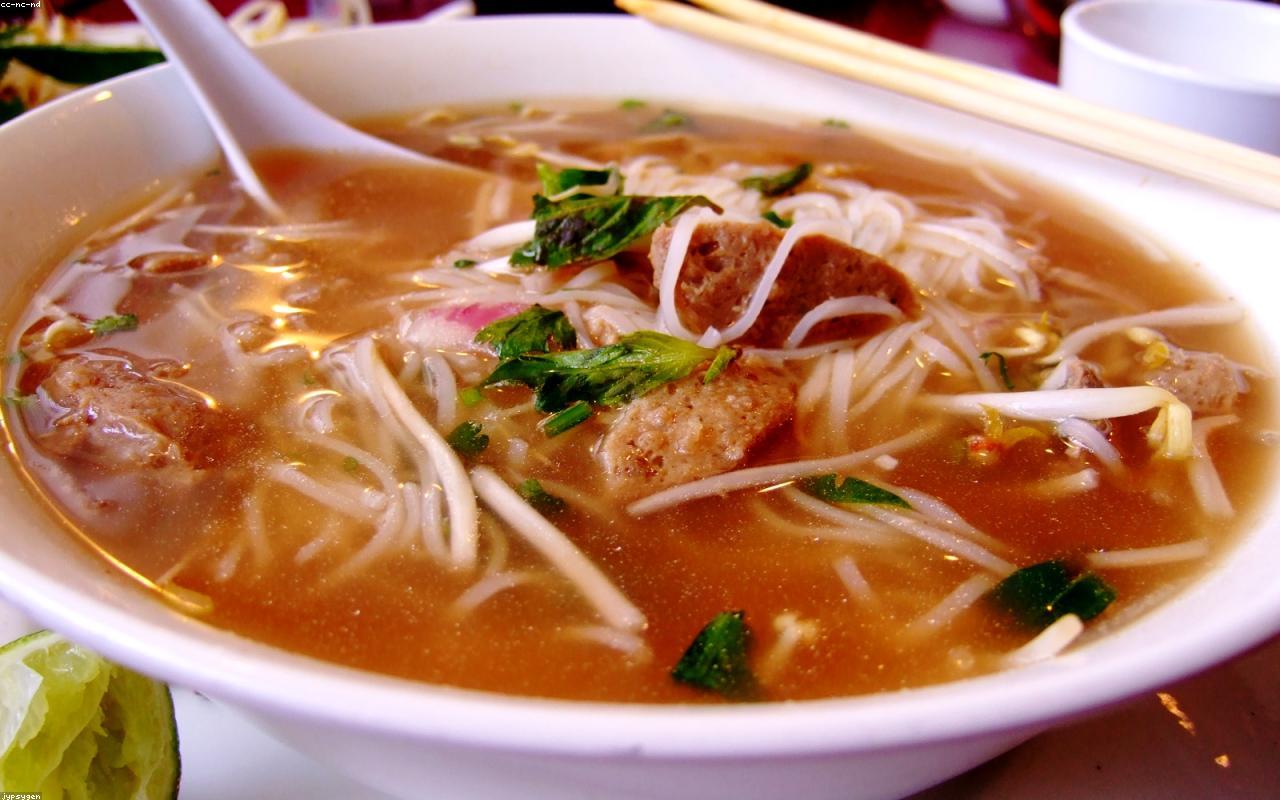
The first variation, his Tuesday-night default: chicken stock with rice noodles and a poached egg. He heats a quart of his Sunday chicken stock in a small saucepan with a thumb of smashed ginger and a sliced spring onion. Eight minutes at a simmer.
He drops a small nest of dried rice vermicelli into the simmering stock and cooks it for three minutes. A whole egg, cracked into a teacup and slid carefully into the broth, poaches in the next three.
He tips the whole thing into a deep bowl, finishes with a teaspoon of black vinegar, a few drops of toasted sesame oil, and a torn handful of cilantro. Total time, including the eight minutes the stock warmed: fourteen minutes.
The second variation, for when the chicken stock has run out: dashi with udon and a soft-boiled egg. He makes the dashi from scratch in eight minutes, using a square of kombu and a generous handful of katsuobushi. The shortcut here is not a shortcut. Made dashi is a thing of consequence.
He brings the dashi to just below a simmer with a tablespoon of light soy and a teaspoon of mirin. A frozen disk of Sanuki udon — the good kind, vacuum-packed from the Korean market — goes in for ninety seconds, just to thaw and warm through.
The egg has been soft-boiled separately, six minutes from cold water to ice bath, peeled while still warm. He halves it lengthwise and sets it on the noodles. A scattering of thin spring onion and a sheet of nori, torn.
The third variation is the one he reaches for in summer, when the heat in Seoul is intolerable and the idea of a hot bowl is unbearable. Cold buckwheat noodles in a cold dashi-soy broth, with cucumber matchsticks, a halved soft-boiled egg, and a spoonful of ice.
The dashi for the cold bowl is made the same way as the hot one but is then cooled overnight in the fridge with a splash of rice vinegar and a teaspoon of sugar. The cucumber gets a brief salt-rest to lose its water.
The noodles — 100% buckwheat soba, the ones from the small importer on Itaewon-ro — cook for four minutes, get rinsed under cold water until they are cold to the touch, and go into the bowl. The cold broth, the ice, the cucumber, the egg, a sliver of yuzu peel.
What unites the three variations is the structure, not the ingredients. A quart of stock. A starch that cooks in the stock. An egg. A green. A sharp finish — vinegar, citrus, sometimes a chili oil. Four parts, plus one.
The broth bowl is, Sam thinks, the most under-discussed dish in the Western home-cooking conversation. Western home cooks have soup, which is a meal in itself, and they have noodles, which require a sauce, but they do not usually have the broth bowl — the noodles-in-stock-with-egg-and-green that is the default weeknight meal across most of East Asia.
He is not arguing that everyone should eat broth bowls. He is arguing that everyone should have one default dish that takes less than twenty minutes, uses something they always have, and does not require thought at 7:30 p.m. on a Wednesday.
His mother, who is seventy-three and lives in Daegu, has a different default. Hers is a soft tofu stew called sundubu-jjigae, which she has made every Tuesday of her life for as long as he can remember. Twelve minutes from cold pan to table. She has cooked it, by his rough estimate, more than two thousand times.
The point is not the recipe. The point is having one.
He has, over the years, tried to talk his Western friends into the broth bowl as a household practice. The objection is always the same: the stock. Where does the stock come from?
The answer is that the stock comes from Sunday. On Sunday afternoon, between the laundry and whatever else, he simmers the carcass of a chicken — or a packet of pork neck bones, or just kombu and dried mushrooms — with an onion and a thumb of ginger for two hours, strains it, cools it, jars it. Forty minutes of active work for two weeks of weeknight dinners.
By 7:32 on a Wednesday in June, Sam has finished the cold soba variation and is sitting on his small couch with a glass of cold barley tea. The dishes are already washed. The bowl was the only thing he used.
The broth bowl, in any of its forms, does not announce itself. It does not impress guests. It is the dish you cook for yourself on the night when you are too tired to do anything else and still want to eat something that resembles a meal. That, for a single person at the end of a Wednesday, is the highest thing a dish can be.
Filed under