Adrian Coate's lemon-ginger shrub begins on a Saturday in early June in Portland, Oregon, at a Hawthorne Boulevard farmers market where he buys six lemons, a knob of ginger about the size of his thumb, and two pounds of cane sugar from a bulk co-op down the street.
He has been making the same shrub, with the same ratio, since 2017. The ratio is one part fruit and aromatics to one part sugar to one part vinegar, by weight. A shrub is a drinking vinegar with a long history in colonial American kitchens, and it works because the sugar and vinegar pull the fruit's flavour into a stable, refrigerator-keeping syrup.
He weighs everything on a small electronic scale that lives on the counter. Six lemons, peeled in long strips with a Y-peeler and the flesh segmented over a bowl to catch the juice, come to about 450 grams. The ginger, scrubbed but not peeled and grated on a microplane, adds another 60. Round it up: 500 grams of fruit and aromatics.
Then 500 grams of cane sugar and 500 grams of white wine vinegar. He uses a Champalou cooking vinegar from a Loire producer he has bought for years, but a good supermarket white wine vinegar works the same way. He does not use apple cider vinegar for this one; it competes with the lemon.
The peels and the ginger and the sugar go into a quart Mason jar first, and he muddles them with the back of a wooden spoon until the sugar is wet and the peels have released some oil. The jar goes into the refrigerator for 24 hours.
This is the maceration step. The sugar pulls water and flavour out of the lemon zest and the ginger and creates a thick, perfumed syrup that smells, by the next morning, like the cleaning aisle of an Italian kitchen.
On Sunday he adds the lemon juice and the vinegar, stirs until the sugar dissolves, and lets the jar sit on the counter for another twelve hours. Then he strains the whole thing through a fine-mesh sieve into a clean quart bottle and refrigerates it.
The shrub is ready to drink immediately, but it improves for about two weeks. The flavours settle, the sharp edge of the vinegar mellows, and the ginger comes forward. After about six weeks it begins to lose its brightness, which is why he makes it in batches of one quart at a time, not three.
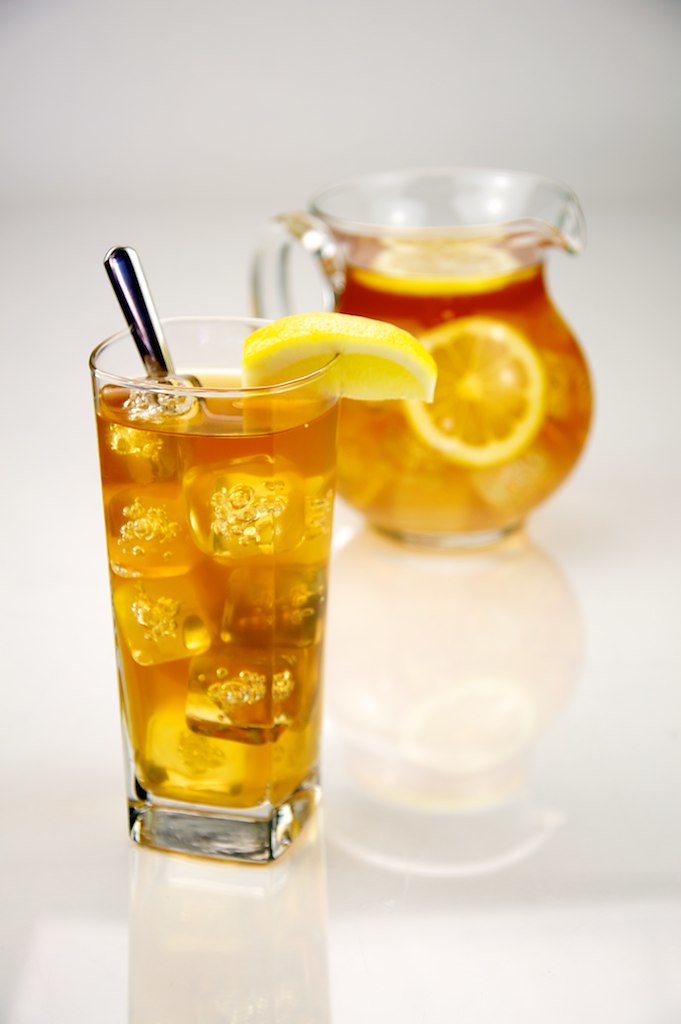
The simplest serving is two ounces of shrub over ice, topped with cold filtered water. He uses a tall glass and stirs with a long iced-tea spoon. The result tastes like a lemonade that has been to school: more complex, less sweet, with a vinegar finish that wakes up the back of the mouth.
On a hot Saturday in July he will sometimes add a splash of soda water for the bubbles, but he does not buy soda water specifically for this drink. If there is a half-bottle of seltzer in the refrigerator he uses it. If not, he does not.
He has tried the shrub with gin. He has tried it with bourbon. The gin version is good; the bourbon version is too much. The shrub for him is a non-alcoholic drink first and a cocktail base second, and he tends to keep it that way.
What he does cook with is the dregs of the jar at the end of summer. The last quarter-cup of shrub, by mid-September, is too concentrated to drink and too good to throw away. He whisks it into a vinaigrette with olive oil and a little Dijon, and it dresses tomato salads through the end of the season.
He has also used the spent peels and ginger, which he saves from the straining and dehydrates in a low oven, as a base for a citrus salt. He grinds them in a small spice mill with flaky salt and uses the result on roasted vegetables. This is a recipe for another time.
The shrub is portable. He has carried it in a small bottle to a friend's house in the Columbia Gorge, where they drank it on a porch with grilled chicken and called it dinner. He has packed it in a cooler for a Saturday at a beach on the Washington coast. It does not require ice if the day is short.
His refrigerator in early summer is mostly shrub and condiments. He understands this is not for everyone. The shrub takes up a quart of shelf space that could be occupied by milk or leftovers, and the smell, when the jar is opened, fills the kitchen for about a minute.
He likes the smell. He likes that the shrub is a project that takes about thirty minutes of active work, spread over three days, and rewards him for the rest of the summer.
He likes that the bottle on the second shelf is, in a small way, a record of June: which lemons he found, which ginger looked best, what the weather was on the Saturday he made it.
He keeps a small notebook on the kitchen shelf where he writes the date of each batch and a one-line note about what he changed. The June 2024 batch was made with a Meyer lemon at the end of its season and was, by his own note, too floral. He did not repeat it.
The June 2025 batch was the standard recipe and was, by his own note, the best he has made. He is trying to repeat it this year, which is why he bought six lemons of similar size on Saturday and grated a knob of ginger that matched the one he had used in 2025.
Whether the new batch is as good as the old, he will know in two weeks. He suspects it will be close enough. The differences, year to year, are part of what keeps him making it.
The empty bottle from last summer is on the windowsill. He will run it through the dishwasher tomorrow and put it back into rotation.
Filed under