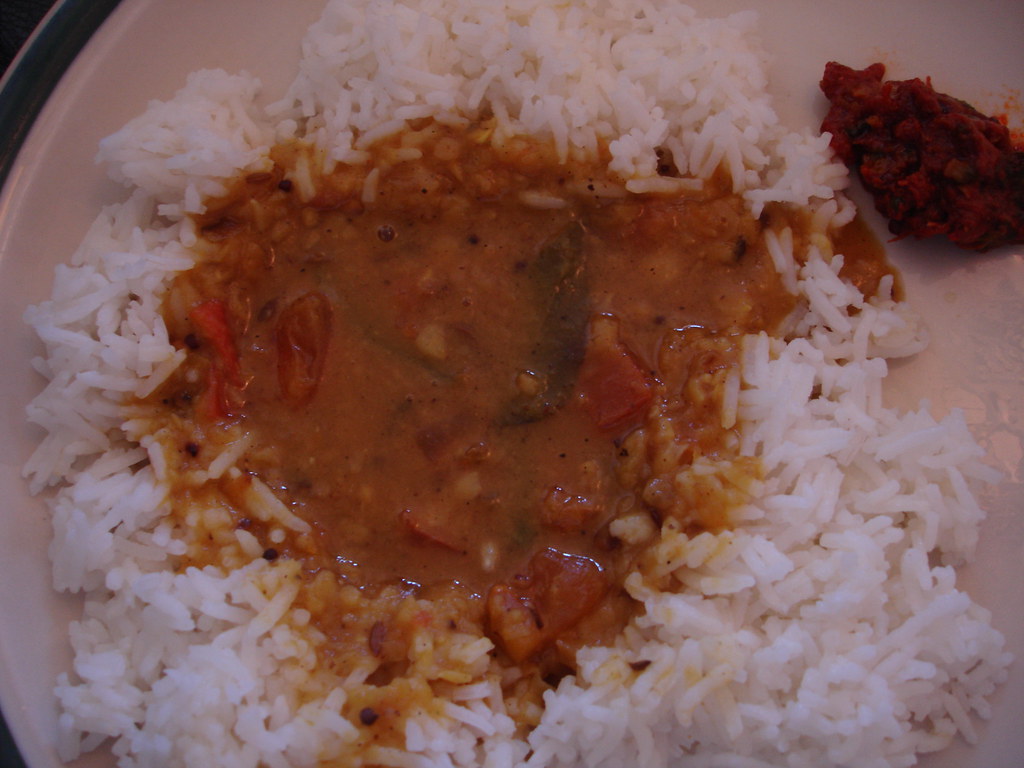
Adrian Coate cooks his dal in a 4-quart Dutch oven that was given to him by his sister Margot in 2014, the year she moved to Vancouver. The pot has a small chip on the rim. He does not care.
On a Sunday afternoon in late April, he rinses a pound of red lentils — masoor dal — in a fine-mesh strainer until the water runs clear. This takes longer than people think. He counts four full rinses.
The aromatic base is straightforward. One large yellow onion, diced. Four cloves of garlic, smashed. A two-inch piece of ginger, peeled with the back of a spoon and grated on a Microplane.
He heats three tablespoons of ghee in the pot over medium until it shimmers, then adds a teaspoon of black mustard seeds. They pop within thirty seconds. He has learned to keep the lid handy.
Cumin seeds follow, a full tablespoon, and then the onion. He stirs and lets it go for ten minutes, until the edges of the onion have gone the color of dark honey. This is the only part of the dish that requires patience.
The garlic and ginger go in next, then a heaped tablespoon of ground turmeric, a teaspoon of garam masala, and a half teaspoon of cayenne. He toasts the spices for forty-five seconds. The kitchen, by this point, smells like a small Lahori grocery on a winter afternoon.
He adds the rinsed lentils, six cups of water, and a 14-ounce can of Bianco DiNapoli crushed tomatoes. A heaped teaspoon of kosher salt. He stirs once and brings the pot to a simmer.
The dal cooks, lid askew, for thirty-five minutes at a steady low boil. He does not stir it much. He stirs it once at fifteen minutes and once at thirty, to make sure nothing has caught on the bottom.
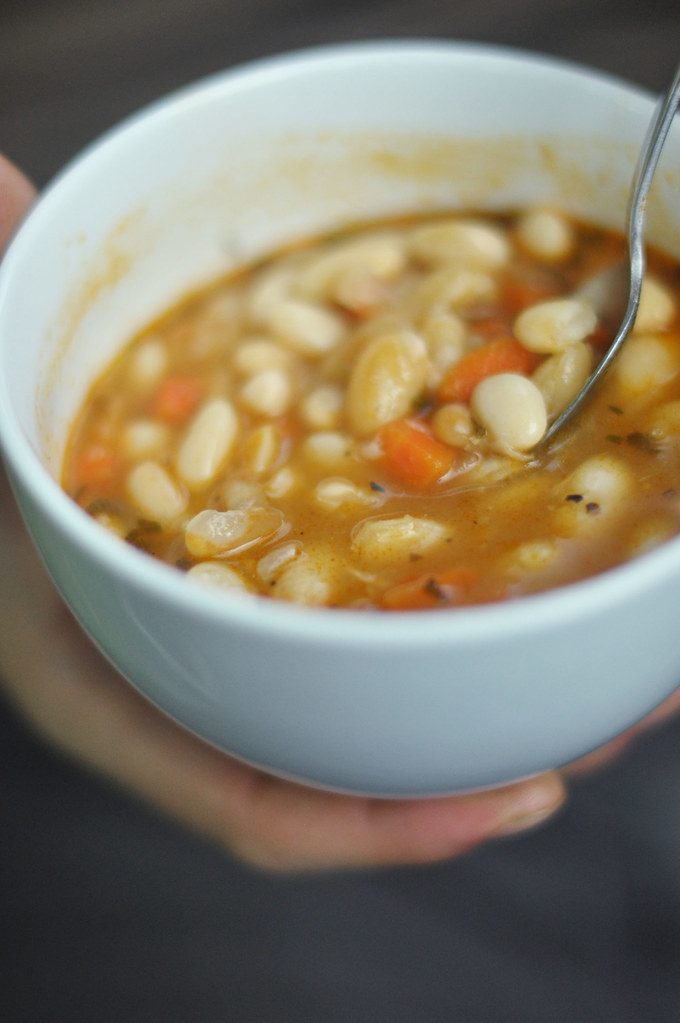
At the end the lentils have broken down into a soup the color of a Mexican blanket. He whisks it briefly with a wooden spoon to even out the texture, then tastes. It needs more salt. It always does.
The tarka — the second-stage tempering — is the dish's signature. In a small steel skillet, he heats two more tablespoons of ghee, drops in a sliced shallot, and lets it brown to the edge of burning.
He kills the heat and adds a teaspoon of Kashmiri chili powder and the juice of half a lemon. The mixture foams. He pours it over the dal in the pot, swirls once, and serves.
On Sunday night the dal is honest. Bright. A little hot. He eats it with a piece of toasted sourdough from the bakery on Northeast Killingsworth, which is not the right bread but is the bread he has.
On Monday it is better. The flavors have set. The shallot from the tarka has gone tender in the body of the dal. He warms a bowl in a saucepan with a splash of water and eats it over jasmine rice.
Tuesday's portion gets a small adjustment. He stirs in a handful of baby spinach in the last minute of reheating, and a spoonful of full-fat yogurt at the table. It becomes a different dish.
By Wednesday the dal has thickened to the point that it could be eaten with a fork. He thins it with chicken stock from the freezer and tops it with a fried egg, the yolk still wet.
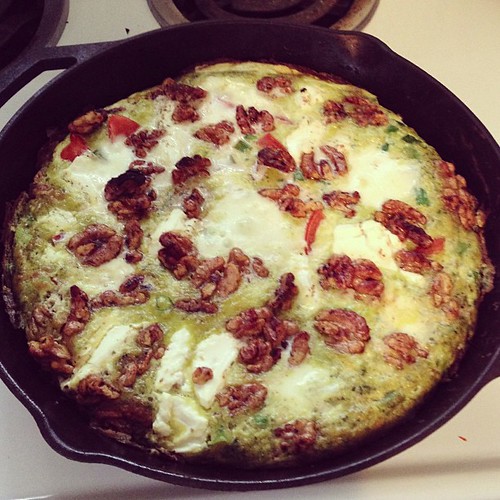
Thursday is the last of it. There is maybe a cup and a half left in the pot. He folds it into a beaten egg with a quarter cup of grated cheddar and cooks it as a frittata in the same Dutch oven.
Adrian keeps a small notebook on the kitchen counter — a Muji A6, the cheapest one — and he writes the night's dinner in it after he eats. Five nights from one pot of lentils, the entry for the week reads.
The dish costs him, by his count, $7.40 for the whole pot. The lentils were $3.20 a pound at the Hawthorne Fubonn. The tomatoes were $3.80. The aromatics and spices, amortized across the pantry, are pennies.
There is no ceremony to dal. It is the dish people in cooler climates cook when the days are short and the pantry is what they have. It does not photograph well. It does not need to.
On Friday the pot is empty and Adrian rinses it in the sink and puts it back on the stove, upside down to dry. He thinks, briefly, about whether he should cook the same pot again next week. He probably will.
What he has learned, after a decade of making this dal, is that the dish is not the recipe. The dish is the rhythm — Sunday large, Monday set, Tuesday with spinach, Wednesday with an egg, Thursday in another form.
Filed under