On a Thursday evening in March, in a top-floor flat on Marchmont Road in Edinburgh, Petra Sloane fed her sourdough starter the way she has fed it every Thursday for the better part of eight years.
Fifty grams of starter, fifty of cold tap water, fifty of stoneground wholemeal from Mungoswells, the small mill out in East Lothian. She stirred it with a chopstick. She did not weigh anything to the gram. The numbers are approximate at this point, and the starter does not mind.
The starter is called nothing. Petra is suspicious of bakers who name them. It lives in a wide-mouth jam jar with a loose lid, on the second shelf of a cupboard that also holds the oats and the spice tins.
By Friday morning at half-past seven, the starter had roughly doubled. She mixed the dough then: 500 grams of white bread flour, 100 grams of the same wholemeal, 380 grams of water, 100 grams of starter, 11 grams of fine sea salt. She wrote the figures on the back of an envelope, as she does most weeks, then threw the envelope away when she was done.
The flour is from Shipton Mill, a small commercial concession in the rhythm. She used to grind her own for a while and stopped. It was not better. It was just more work.
She left the dough to autolyse for forty minutes while she answered three emails and made a second pot of tea. Then she stretched and folded the dough, in the bowl, four times, at thirty-minute intervals. This is the part of the day that bears the name of work, and it is mostly not work.
By noon the dough had risen by about a third and looked alive. She shaped it on the counter without flour, with wet hands, into a loose round. She left it on the wood for twenty minutes and then shaped it tighter and put it in a linen-lined banneton, seam side up.
Into the fridge it went, where it would stay for the next eighteen to twenty hours.
Petra has, over the years, become uninterested in the discourse around sourdough. The hydration percentages, the crumb-shot photography, the contest of openness. She bakes a loaf that her partner and her downstairs neighbour can both eat in five days without it going stale, and which makes good toast on day four. That is the brief.
Saturday morning at eight, she set the oven to its highest temperature, with a cast iron combo cooker inside, and went out for a coffee at the place on the corner. She was back at nine. The oven was ready.
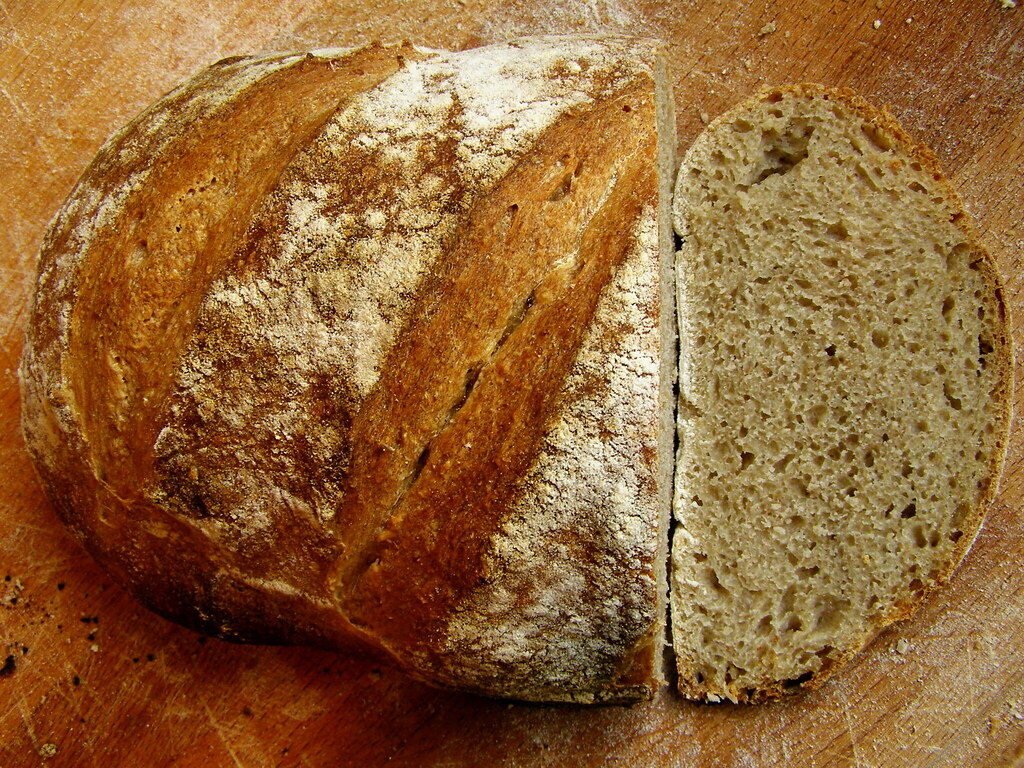
She turned the dough out onto parchment, scored it once down the middle with a paring knife, lowered it into the hot pot, and put the lid on. Twenty minutes covered, then twenty-five uncovered with the lid off and the heat dropped to 230 degrees Celsius. The loaf came out the colour of an old penny.
She let it cool on a wire rack until lunchtime. The crumb, when she cut into it at one in the afternoon, was open enough but not theatrical. The crust crackled, then went quiet.
Her partner ate two slices with butter and the marmalade Petra had made in February. The neighbour, an older woman named Catriona who has lived in the building since 1986, got the heel of the loaf wrapped in a tea towel, the same way Petra's grandmother used to give bread to her neighbours in Pitlochry.
There is something to be said for the loaf you make every week. It is not the most ambitious loaf you could bake. It is the loaf you have agreed, with yourself, to bake.
The starter has been through three flats, two ovens, one broken fridge, and a long stretch in 2022 when Petra was caring for her father and did not bake for almost five weeks. She put the starter in the back of the fridge and trusted it. When she pulled it out and fed it, it took two days to come back, and then it was fine.
The rhythm matters more than any single loaf. The Thursday feed, the Friday mix, the Saturday bake, the Sunday loaf already half gone. The week is shaped by it in a way that is hard to explain to people who do not bake.
Petra does not advise other people on how to begin. She thinks the advice does more harm than good. What she will say, if asked, is that the loaf you keep baking will teach you the things the loaf you tried once cannot.
She has notebooks from her first two years, full of crumb diagrams and timing notes and ratios written in three colours of ink. She has not kept a baking notebook since 2020. The loaf is the notebook now.
There is no recipe at the end of this piece. Petra was asked, gently, twice, and she said no. The recipe is not the point. The Thursday is the point.
Filed under