On a shelf above her stove in Edinburgh, Petra Sloane keeps a small black Moleskine that she calls the marmalade book. It is a ledger of every batch she has made since January 2021. There are sixty-two entries.
Each entry records the date, the citrus used, the weight of fruit and sugar, the yield, the setting time, the final pectin gel, and a one-line note on the result. Slightly too soft. Too dark. Best of the year. Bitter peel — leave another day next time.
The book is the centre of her preserving year.
She makes marmalade twelve times annually. Not every batch is large — some are a single jar from a windfall of fruit, others are six pounds at a stretch. But the rhythm of one batch per month, she has found, keeps her engaged with the craft in a way that an annual Seville-orange marathon never quite did.
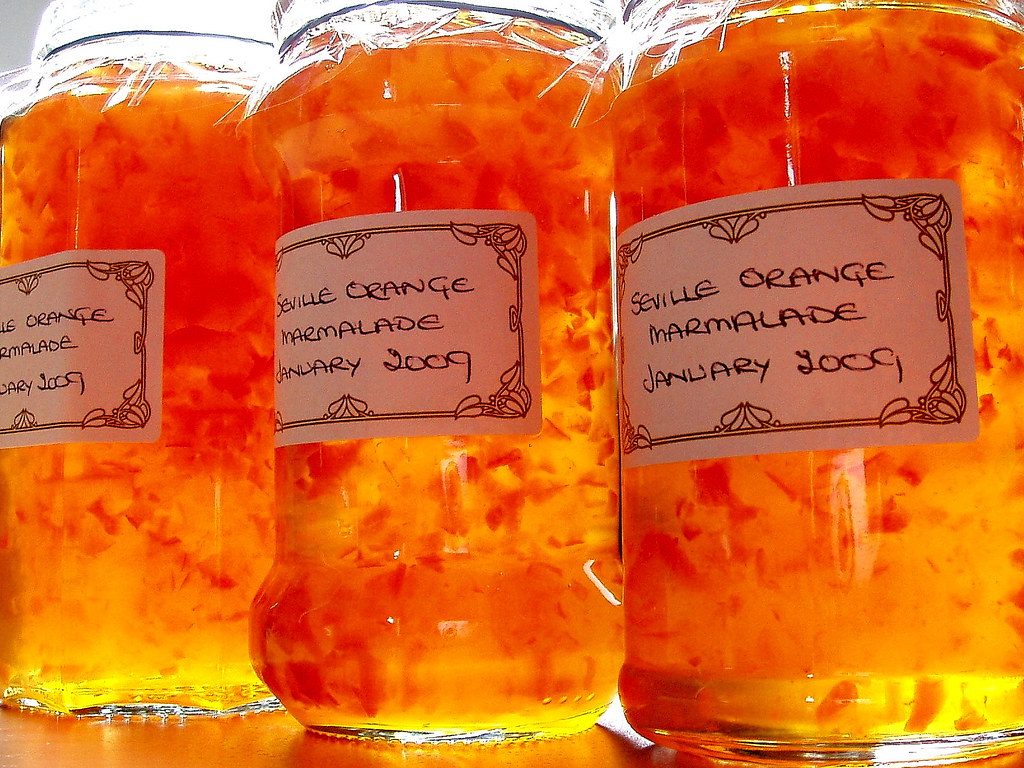
In January she begins with the Sevilles. They arrive at the Edinburgh fruit market in the first week, shipped from Andalucía, and she buys three kilos. The Seville is the classic marmalade orange: thick-skinned, sour, full of pectin in its pith and pips. She uses the Pamela Lalonde recipe she has refined over fifteen years, a one-to-one ratio of fruit to sugar after the first cook, sliced peel medium-thin.
The January batch fills eight jars. They go on toast every morning through March.
In February she makes a blood-orange marmalade with Moros from Sicily, three kilos. The colour is alarming on the first cook — almost beetroot — and settles into a deep ruby in the jar. The flavour is sweeter than the Seville, less complex, but on a winter morning with strong coffee it has its own argument.
In March, as the Sevilles wind down, she does a small bitter-grapefruit batch with two kilos of Texas red grapefruit. The peel is harder to soften than orange peel; she boils the strips three times in changes of water before adding sugar.
She does not make marmalade in April. There is no good fruit and she has too much on the shelf already. The book reads, for April, simply: Nothing made. Three jars from January still open.
In May she does a lemon-and-thyme marmalade with Amalfi lemons sent up from a London importer. Six lemons, a half-kilo of sugar, a small bundle of thyme tied with twine and removed at the end. It is the only sweet, fragrant marmalade in her annual rotation and the one she gives away most often.
June is gooseberry. Gooseberry is not, strictly, citrus, and a purist would argue it should not be in a marmalade ledger. She argues otherwise. The fruit has the right tartness, sets like a dream, and produces a jar that she eats with cheese rather than toast.
In July she takes a deliberate break. The book notes: Stone-fruit season. Marmalade resumes in August. The page is otherwise blank.
August is plum. Damson plums from her brother-in-law's garden in Fife, four kilos, with the stones tied in muslin and cooked alongside for pectin. Some would call this jam, not marmalade. She calls it what she wants. The skins, sliced into the finished preserve, give it the bittersweet quality that marmalade requires.
September she returns to citrus. A green-lemon marmalade with lemons from Sorrento, paler and grassier than the Amalfi. She uses less sugar and accepts a softer set.
In October she makes quince marmalade, which is the original marmalade — the word comes from marmelo, the Portuguese for quince — and she always notes this in the margin of the book with a small underline, half irritation, half pride. The quinces come from a single tree at a friend's house in East Lothian. She gets four kilos in a good year, two in a bad one. The cooked fruit is the deep coral colour of a winter sunset.
November is bergamot. She buys three kilos of Calabrian bergamots from a specialist supplier and works fast — the fruit ages quickly. The peel is more aromatic than any other citrus she handles all year. The kitchen smells for two days afterward.
In December she makes a Christmas marmalade with Seville oranges from the freezer (she always saves a kilo from January's batch), brandy, and a few cloves. This one she labels with a strip of brown paper and gives away in pairs.
That is the year. Eleven batches, twelve months, an average of fifty-five jars made and roughly fifty-five jars consumed or given. The shelves above her stove rotate steadily.
She has refined a few things over the years. She no longer trusts a sugar thermometer alone; she tests for set with a chilled saucer in the freezer, dropping a teaspoon of marmalade on it and waiting thirty seconds before pushing it with her finger. If the surface wrinkles, it is set. If it slides, another five minutes.
She has stopped agonising over peel thickness. Medium is fine. Some people like it thinner; some thicker; her own preference settles around two millimetres, and she cuts by eye now.
She has come to believe, strongly, that the difference between an adequate marmalade and a memorable one is the slow first cook of the peel — at least two hours, sometimes three — before any sugar is added. Peel cooked properly will collapse into transparency. Peel rushed will be chewy in the finished jar.
The book stays on the shelf. New entries are added in pencil. The first marmalade of 2027 will be Seville again, sometime in the second week of January, weather and supply permitting.