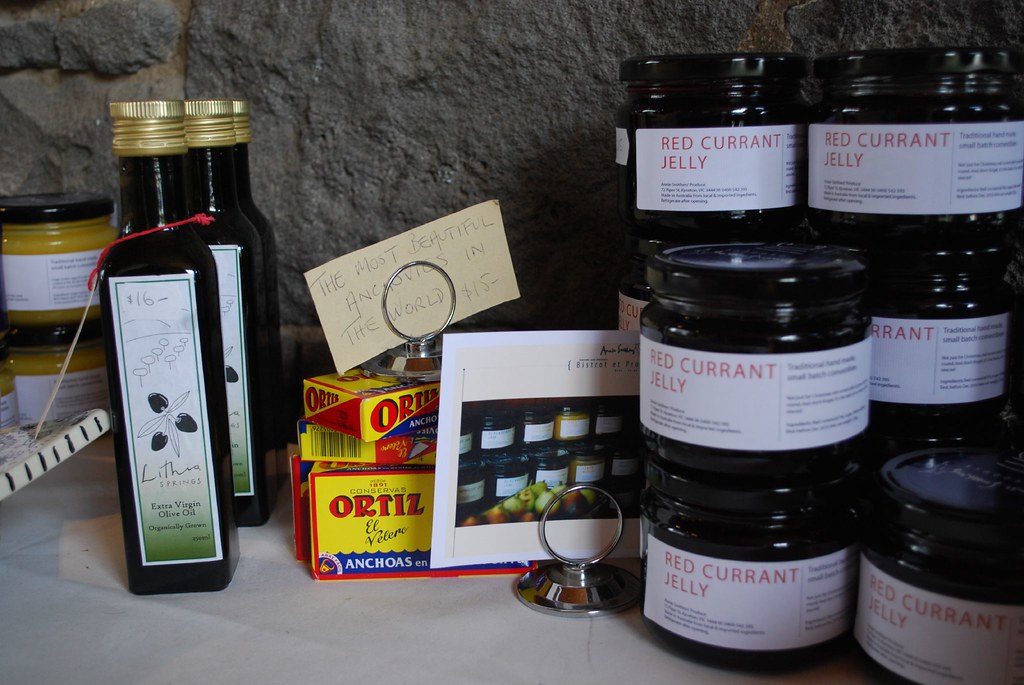
There is a small grocery on Atlantic Avenue in Brooklyn, three blocks from where Lou Bertillon lives, that stocks four different brands of canned anchovies on the same shelf as the canned tomatoes. The Ortiz tin sits next to the Agostino Recca, which sits next to the Roland flat fillets in oil, which sits next to a glass jar of Spanish anchoas from a small importer in Donostia. Lou buys the Ortiz when she can find it and the Recca when she can't.
She keeps four tins in the cupboard at all times. This is not a quirk. It is a working system.
The argument for anchovies as a household staple is unfashionable to make in 2026, because the food internet has spent five years now noticing them. But the noticing has done little to change actual home kitchens, which still treat the tin as a special-occasion ingredient or, worse, as a topping for pizzas they will not order.
Lou's case, which she has made for fifteen years as a working cook and now as a home one, is this. Canned anchovies are a salt that has a flavor of its own. They dissolve into hot fat. They do not announce themselves. And they are, per ounce, one of the cheapest ways to give a dish what cooks used to call bottom, before that word fell out of use.
On a Tuesday in late March 2026 she made a pasta in her kitchen for her partner Reine and a friend named Inez. The pasta was nothing. Olive oil, four anchovy fillets, three cloves of garlic, a pinch of chili, a head of broccoli broken into florets, a handful of breadcrumbs toasted in the same pan, a pound of orecchiette, the pasta water, lemon at the end. The anchovies dissolved before the garlic browned. Inez, who has said for years that she does not eat anchovies, ate two bowls.
This is the point. Lou does not make pasta puttanesca often, because the anchovies in puttanesca are recognizable and many people who say they do not like anchovies are telling the truth about that specific encounter. The trick is not to argue with them. The trick is to use the anchovy as seasoning, in a place where its identity has been broken down.
Four fillets in three tablespoons of warm olive oil over low heat for ninety seconds. They will go grainy and then they will disappear. What is left is an oil that tastes like the sea without tasting like a fish. This oil is the basis of most of what Lou cooks on a weeknight.
She uses it as the starter for greens. A bunch of escarole, washed and torn, dropped into the oil over medium heat with a clove of garlic and a slick of water. Lid on for two minutes. Lid off, lemon, eaten with bread. Eight minutes from cold pan to dinner.
She uses it as the basis for a roast chicken pan sauce. After the bird comes out and rests, she pours off the fat, leaves the fond, adds a quarter cup of dry white wine, scrapes, then drops in three anchovies and a tablespoon of butter. Stirred. Spooned over the carved meat. People ask what is in the sauce. She says butter and wine.
She uses it in a Caesar dressing, of course, but she also uses it in a vinaigrette for boiled potatoes, which she learned from her aunt Solange in 2009. One fillet, mashed with the side of a knife, into two tablespoons of olive oil, one of red wine vinegar, a teaspoon of Dijon. Tossed with warm waxy potatoes, parsley, capers. Refrigerated for an hour. Eaten as a side dish or, if the day is hot, as lunch.
She uses it in tomato sauces in winter, when fresh basil is not available and the tomatoes are canned and need help. Two fillets melted into the oil before the garlic. The sauce comes out savory in a way that long-simmered Sunday gravy is savory, but in twenty minutes.
There is a way to store an open tin, which most people do badly. Lou flips the lid back over the remaining fillets and pours the oil back over them, then transfers the entire contents to a small glass jar with a tight lid. She keeps the jar in the back of the refrigerator. The fillets keep for about three weeks. The oil itself, which has become slightly more anchovy-flavored, gets used in salad dressings.
If a tin runs out in the middle of a recipe she has, on occasion, substituted a teaspoon of Asian fish sauce. This is not the same thing. It is louder and sharper and does not have the body of the dissolved fillet. But it will save a dinner.
The brands matter less than people will tell you, with one exception. Salt-packed whole anchovies, which require rinsing and filleting before use, are a different ingredient and a different commitment. Lou has a tin of those too, kept in the refrigerator, and she uses them for the rare dish where the anchovy is the point. For everyday cooking, the small tin of flat fillets in oil is what she reaches for.
The price has crept up. A tin of Ortiz at the small grocery on Atlantic Avenue was four dollars and twenty-nine cents in March 2026. A tin of Recca was three forty. Roland is about two dollars. Lou keeps a mix.
Once a year, in late April, she splurges on a jar of the Spanish anchoas. They are eight dollars. They are eaten by themselves on toast with butter, one at a time, like olives. They are not for cooking. They are for an evening on the fire escape with a glass of vermouth and Reine, when the weather first turns warm enough to sit outside without a coat.
Reine does not like anchovies. She eats the toast.
Lou has been making this argument long enough that she no longer expects people to believe her until they have eaten a bowl of pasta that had four fillets melted into it without their knowledge. Then they always ask what she did. She tells them. They go home and buy a tin. Sometimes they cook with it. Sometimes the tin sits on the shelf for two years.
Either way, the tin is there. Which is the first condition.
The shelf in her cupboard, in late April 2026, holds three tins of Recca, one of Ortiz, half a jar of the Spanish anchoas, and a small refrigerated jar of fillets she opened last week. It is not a glamorous shelf. It is, however, the shelf she reaches for almost every night.