On a Tuesday in late March, Sam Park grinds 90 grams of Ethiopian Yirgacheffe at setting 28 on a small burr grinder he has owned since 2019. The grounds are coarse, the size of cracked pepper, and they fall into a wide-mouth Ball jar that has lost its original lid twice.
He pours 750 millilitres of room-temperature filtered water over the grounds, stirs once with a long bamboo skewer, and screws on a piece of plastic wrap held by a rubber band. The jar goes into the second shelf of the refrigerator. It will sit there until tomorrow morning, when he will strain it through a paper filter set inside a small steel sieve.
This is what he calls the rhythm. He has kept it, with adjustments, since 2021.
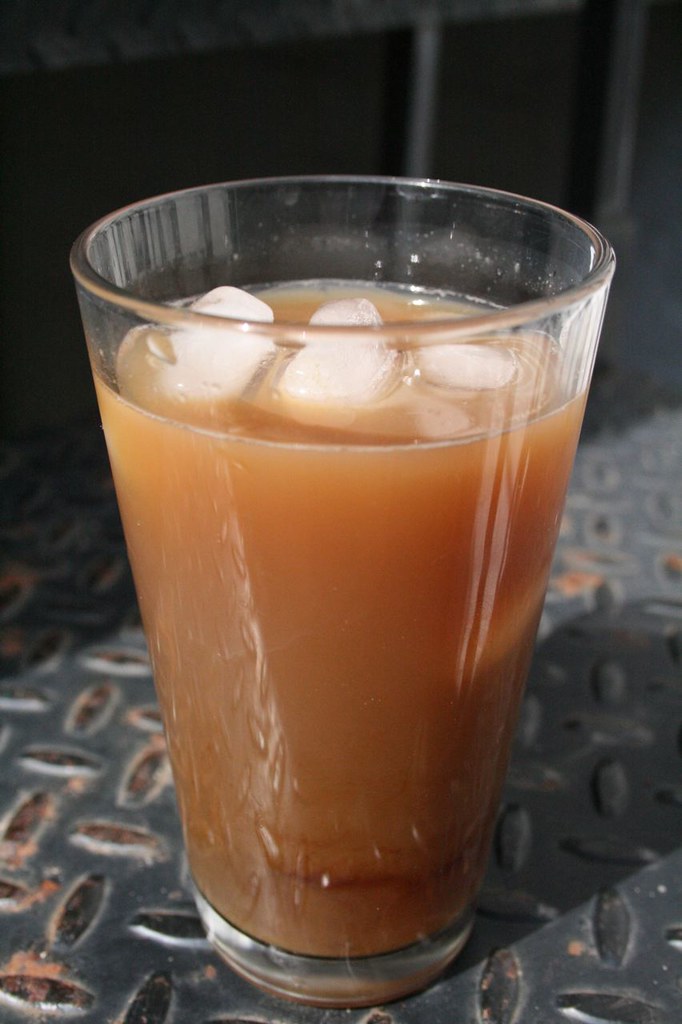
The adjustments are seasonal, and they are small. In spring he uses a washed Ethiopian and drinks the result over a single large ice cube with nothing else in the glass. The cup he uses is a thick-walled tumbler that belonged to his grandmother, who lived in Daejeon and who drank only barley tea.
By June the apartment in central Seoul gets warm enough that he begins drinking his cold brew with milk. He uses a local barista-grade oat milk made by a small dairy alternative in Paju, and he pours it in a ratio that he has stopped measuring. Roughly one part milk to three parts coffee. Sometimes a little more milk on a hot day.
In July and August he cuts the brew time. Twelve hours instead of eighteen, because the grounds extract faster when the kitchen is at 27 degrees and the refrigerator runs longer between cycles. The coffee comes out brighter, almost sharp, and he prefers it that way against the heat.
September is the hinge. He returns to eighteen hours and switches to a Sumatran from a roaster in Mapo-gu who does a particular Mandheling that tastes, to him, of cocoa nibs and damp earth. He drinks it black again. The milk goes back into the refrigerator door for cooking.
Winter is the strange season. The apartment is cold enough that the refrigerator hardly matters, and the appeal of an iced coffee retreats. He keeps making it anyway, but he heats it.
This is the move that surprises people. He pours four ounces of cold-brew concentrate into a small saucepan with four ounces of water, brings it to just below a simmer, and drinks it from the same thick-walled tumbler as in summer. The result is not espresso and it is not drip. It tastes of itself.
He calls it the bridge cup. It is the drink that gets him from December to March, when daylight in Seoul is short and he begins his work at the kitchen table before the sun is up.
The equipment list is shorter than people expect. One Ball jar, one bamboo skewer, one piece of plastic wrap, one steel sieve, and a stack of unbleached paper filters from a Korean supplier who also sells the filters that fit his pour-over cone.
He owns a Hario cold-brew bottle that was a gift in 2022. He used it for six months and put it in the cupboard. The mesh filter clogged. The jar is faster, simpler, and the wide mouth lets him taste the grounds with a spoon partway through to check for off notes.
The economics are unromantic but worth noting. A 250-gram bag of single-origin from his Mapo-gu roaster costs about 22,000 won, which works out to roughly 8,000 won per litre of finished cold brew. A cafe cold brew in the same neighbourhood is 6,500 won for 350 millilitres.
He is not pretending the savings are why he does this. He is mentioning it because home cooking pieces, in his experience, tend to skip the arithmetic and pretend that the only thing being saved is taste.
The taste, in his opinion, is also better. Not always. Not categorically. But on a Saturday morning when he has slept enough and the apartment is quiet, the cup he makes for himself is better than the cup he can buy from the place at the corner.
He thinks this is because the coffee is fresher to his own use of it. The roaster grinds nothing in advance for him, and the brew was made in his own kitchen, twelve to eighteen hours ago, by a person who knew it was for himself.
His wife, Min-jung, does not drink coffee. She drinks a barley tea that her mother makes in batches and sends down from Daejeon every six weeks. The barley tea and the cold brew live on the same refrigerator shelf, in jars of similar size, and they have a kind of household symmetry.
He has been asked, by visitors, whether he ever tires of the rhythm. He says he does not, because the rhythm is what carries him through the rest of the morning. The brewing happens the night before, when his energy is lower and the small repetitive task of grinding and pouring is welcome.
By the time he wants the coffee, the work is done. He strains it, pours it, and sits with it. The whole production from glass-to-mouth is about ninety seconds in summer and about four minutes in winter, when the heating step gets added back in.
It is, he admits, a small thing to write 1,500 words about. But the small things, kept across years, are most of what cooking at home actually is. The morning cup is one of them.
He cleans the jar with a bottle brush after the second pour, and he sets it upside down on a dish towel to dry. Tomorrow he will start again.
Filed under