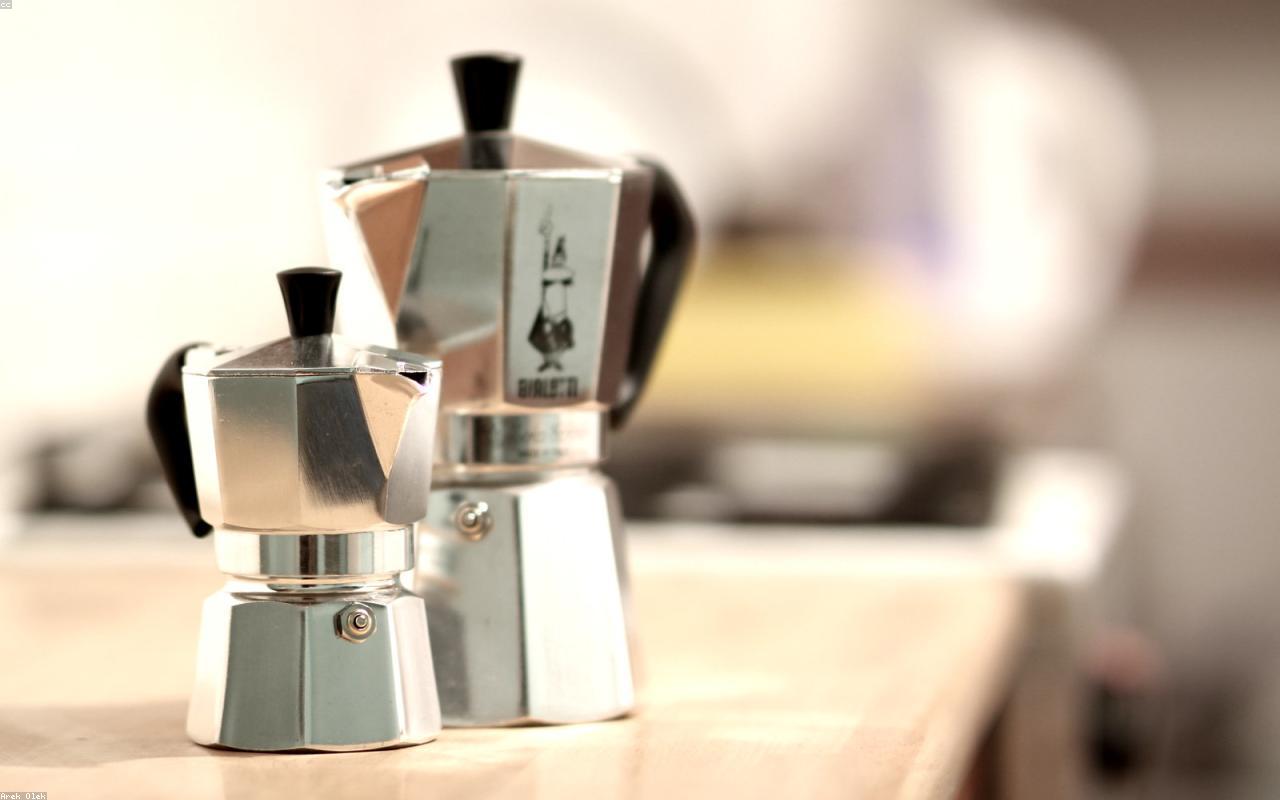
Adrian Coate's Bialetti Moka Express six-cup, the octagonal aluminum pot designed by Alfonso Bialetti in 1933 and essentially unchanged since, sits on the front-left burner of his stove in Portland, Oregon, where it has lived since November 2011, when he bought it at an Italian deli on Northeast Alberta Street for twenty-six dollars.
It has made him coffee, on average, every morning for fifteen years. That is, roughly, 5,400 brews.
The pot is intact. The gasket has been replaced three times, in 2014, 2019, and 2023, at a cost of about four dollars each time. The filter screen has been replaced twice. The handle has been replaced once, in 2017, after the original Bakelite cracked from a careless contact with a hot oven door.
Everything else is the original 2011 pot.
This piece is about how a moka pot actually works, why it makes the coffee it makes, and the small adjustments that separate a mediocre cup from a very good one.
The moka pot is a steam-pressure brewer. Water in the bottom chamber is heated until it boils; the steam pressure builds and forces the remaining hot water up through a tube, through a basket of finely ground coffee, and into the top chamber, where it collects as a thin dark coffee that is somewhere between espresso and drip in body and concentration.
It is not espresso. Espresso requires about nine bars of pressure. A moka pot operates at about one and a half bars. The result is a similar flavour profile — concentrated, slightly bitter, full-bodied — but without the crema and without the fine emulsification that defines an espresso shot.
It is also not drip coffee. Drip coffee is a clean infusion at about 95 degrees Celsius through a paper filter. Moka coffee is a hotter, faster percolation through a metal filter, with more of the coffee oils carried into the cup. The result is heavier, more bitter, more aromatic.
What the moka makes is its own thing. The Italians have been drinking it for ninety years and they have not been wrong.
On the question of which moka: Bialetti is the original and remains, by a small margin, the best. The six-cup Moka Express (cup being a small Italian measure of about 50 millilitres, so six-cup is about 300 millilitres or one large mug) is the right size for one heavy drinker or two moderate ones. Bigger pots exist but they require more coffee to fill the basket and the basket must be filled to brew properly.
There are other brands. The Cuisinox Roma is a stainless steel pot that costs more and works on induction cooktops, which Bialetti's traditional aluminum pots do not. The Alessi 9090 is a designer pot from 1979 that costs five times as much and brews slightly worse coffee. The various supermarket-brand moka pots from China and Brazil work but with thinner aluminum and gaskets that need more frequent replacement.
Coate's recommendation, if you have a gas or electric coil stove, is the original Bialetti at twenty-five to thirty-five dollars. If you have an induction stove, the Bialetti Venus stainless or the Cuisinox Roma. The Bialetti induction adapter plate, which lets the aluminum pot work on induction, also exists, but Coate has not tested one and reads mixed reviews.
The brewing method is straightforward and has, in his experience, four variables that actually matter.
First, water temperature at the start. Fill the bottom chamber with pre-heated water from a kettle, not cold water. Cold water means the pot sits on the burner for several minutes while the water comes up to temperature, during which the coffee in the basket sits at increasing heat and develops bitter notes. Hot water means the brewing starts within thirty seconds of the pot hitting the burner, which preserves the brighter flavours.
Second, grind. Moka coffee should be ground finer than drip but coarser than espresso. A medium-fine grind, roughly the texture of granulated sugar. If the grind is too fine, the pot will choke and pressure will build excessively, sometimes causing the safety valve to vent steam from the side of the pot. If the grind is too coarse, the coffee will under-extract and taste thin.
Many pre-ground supermarket espresso grinds are too fine for moka. A burr grinder set to a medium-fine grind, freshly ground each morning, is the single biggest upgrade most moka users can make. Coate uses a Baratza Encore he bought in 2018.
Third, the fill. The coffee basket should be filled level, not heaped, not tamped. Tamping is for espresso machines. In a moka, tamping creates too much resistance, the pressure builds, the brew slows, and the coffee scorches. Just fill the basket level with a finger or the back of a knife and screw the pot together.
Fourth, heat. Medium-low, not high. A moka on high heat will brew faster but the steam will scald the coffee on its way through. A moka on medium-low takes about four to five minutes from a hot-water start and produces a smoother cup. Coate's gas stove runs at about three on a one-to-ten dial.
When the pot starts to gurgle, the brew is finishing. The last of the water in the bottom chamber is becoming steam, and the steam is what produces the choking sputtering sound. Take the pot off the burner immediately. Continuing to heat at this point will burn the coffee and leave a metallic taste in the cup.
Some people, including Coate, run the bottom of the pot under cold tap water for a few seconds to stop the brewing immediately. Italian purists will tell you this is unnecessary. They are correct that it is unnecessary; they are not necessarily correct that it does not matter. The cold-water stop produces a noticeably cleaner cup, in Coate's testing.
Care: rinse the pot with hot water and a soft cloth after each use. Do not use soap. Do not put the pot in the dishwasher. Both will strip the protective layer of coffee oils that has built up over the years on the inside of the pot, and the coffee will taste worse for several brews afterward while a new layer develops.
Replace the gasket when it begins to look dry, cracked, or hardened. A failing gasket will leak steam at the join between the two chambers, which is loud and which means the pressure is not building correctly. Replacement gaskets cost three to five dollars and are available at any Italian grocery and most kitchen supply stores.
Coate's six-cup, on the burner this morning, with a heaped handful of medium-fine Stumptown Hair Bender ground forty seconds ago, will produce, in about four and a half minutes, the cup of coffee that has begun every working day of his life for fifteen years. The next fifteen seem reasonable to assume.
Filed under