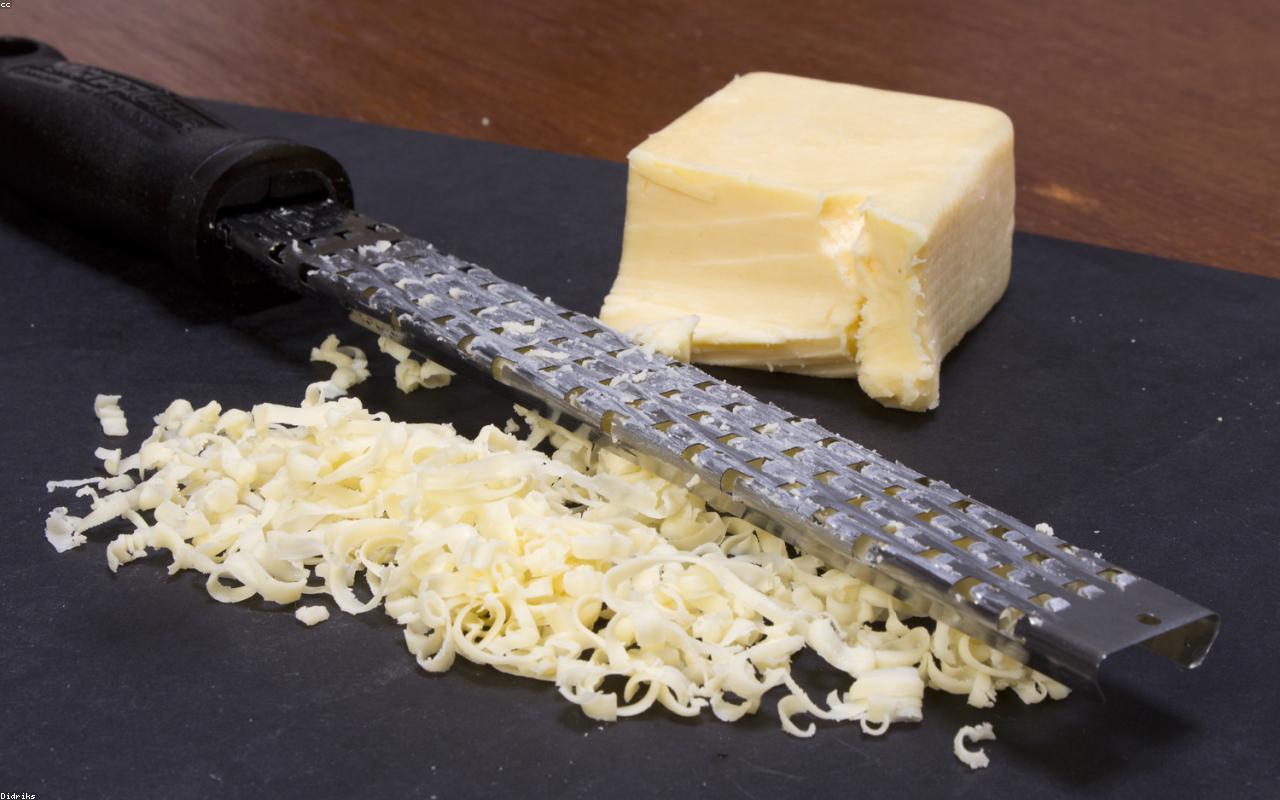
Petra Sloane has used the same Microplane Premium Classic Zester, model 40020, since November of 2016, when her sister gave it to her for her birthday in the kitchen of a flat in Stockbridge, Edinburgh. The handle is black plastic. The blade is 21 centimetres of photo-etched stainless steel. The original retail price was about eighteen pounds.
She has zested, at a rough count, somewhere over a thousand lemons with it. Several hundred limes. Many heads of garlic. A great deal of fresh ginger. Parmesan in clouds. Whole nutmegs in tiny brown drifts that smell like a Christmas she remembers from 1989.
The blade still bites.
Microplane is a brand name that has become a category, in the way that Kleenex became tissue. The original Microplane was a wood rasp made by an Arkansas company called Grace Manufacturing in the 1990s. A Canadian cook reportedly used one to zest an orange in 1994 and the company noticed. By 1998 the kitchen version was on the market.
The technology is photo-etching. The blade is a thin sheet of stainless steel through which thousands of tiny tooth-shaped holes have been chemically etched, leaving each tooth with a sharp lifted edge. The result is a grater that cuts cleanly rather than tearing, which means it removes citrus zest without taking the bitter white pith underneath, and it shreds garlic into a paste so fine it disappears into a sauce.
Before the Microplane, the standard tool for citrus zest was the box grater, which produced a coarse jagged zest with too much pith, or the small pull-handle zester with five round holes that produced long curls of zest meant for drinks rather than cooking. Neither was as good as the Microplane is now. The kitchen genuinely changed.
Sloane uses hers most days. The Edinburgh kitchen runs heavily on bread, citrus, and braised things, and the Microplane is the tool that adds the lift to all three. Lemon zest into a glaze for a pound cake. Garlic into a sauce for braised lamb shoulder. Nutmeg into a winter potato gratin. Parmesan, finely, over pasta at the table.
The model number matters slightly. The Premium Classic Zester, 40020, has the original design and an unetched safety strip at the tip. There is also a Classic Zester, 46020, which is slightly cheaper and a little less ergonomic, and a Premium Zester/Grater, which has the same blade but a thicker handle that some cooks prefer for larger hands. Functionally, all three are the same tool.
There are also a Microplane coarse grater, model 39000, sometimes called the ribbon grater, and a fine grater, model 38000. These are different tools for different jobs. The fine grater, the zester, is what is being discussed here.
On care: hand-wash with hot soapy water and a stiff brush, working from the back of the blade through to the front to push debris out of the teeth. Dry standing up. Do not leave it wet in a sink, where it will rust along the edges of the etched teeth.
Sloane keeps hers in a drawer with the plastic blade cover that came in the original packaging. She lost the cover for several years and stored the Microplane loose in the drawer, where it gradually shaved the corners off a wooden spatula and put a long thin cut on her hand in 2019. The cover is now treated as a non-negotiable part of the tool.
The dishwasher question: yes, technically. The Microplane is rated dishwasher-safe. In practice, the high heat of the dry cycle and the alkaline detergent will, over years, dull the etched teeth. Sloane has tested this in a small experiment with two identical Microplanes given to her by the manufacturer for a piece she wrote in 2021. The dishwasher Microplane, after one year of weekly cycles, zested noticeably less cleanly than the hand-washed one. Not a lot. Noticeably.
Hand-wash if you want the tool to last fifteen years. Use the dishwasher if you want it to last six. Either is fine.
What does not work, and what Sloane would gently warn against, is sharpening a Microplane. The blade cannot be sharpened. The etching is a one-time manufacturing process that cannot be redone with a stone or a file. When the teeth eventually wear past the point of biting cleanly, the tool is finished, and the right thing to do is buy another and recycle the old one.
She has not yet had to do this. She estimates her current zester has another five years in it. Her sister has used hers, the matching one bought at the same time, for the same ten years, with similar results.
There are alternatives. The Cuisipro Surface Glider is a Canadian brand that makes a comparable etched-blade zester at a slightly lower price. It works essentially as well. The Kyocera ceramic zester, popular in some Japanese kitchens, is sharp out of the box but the ceramic blade chips if dropped onto a tile floor. Sloane dropped one. It chipped. She went back to her Microplane the next week.
What is the Microplane not good at? Coarsely shredding cheddar for a melt — the teeth are too fine, the cheese clogs. Grating apple for a salad — the teeth grate too fine, the apple becomes mush. Shredding carrots — same. For those jobs, the box grater or the food processor are the right tools.
The Microplane is for small things turned into smaller things, with maximum surface area and minimum tearing. It is for the last finishing touch on a dish, the lemon zest stirred into the risotto thirty seconds before service, the cloud of Parmesan over the bowl of pasta at the table, the rasp of nutmeg into the cream sauce just before plating.
This is the honest pleasure of the tool. It does one thing. It does it very well. It costs less than a takeaway dinner for two. And it lasts, with reasonable care, for a decade or more.
Sloane's, on the marble counter by the window of the Stockbridge flat, in the lemon-blossom light of an Edinburgh May afternoon, is at this moment in use, producing the fine yellow drifts that will, in about twenty minutes, become a glaze for a tea loaf that she will deliver to a neighbour who has been unwell.
The zester has been in the family, in a manner of speaking, for ten years. The next ten seem entirely plausible.
Filed under